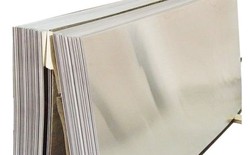
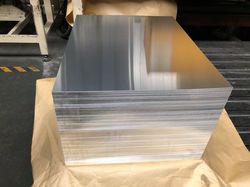
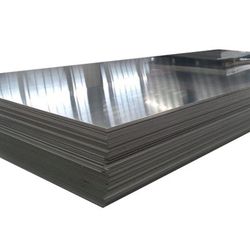
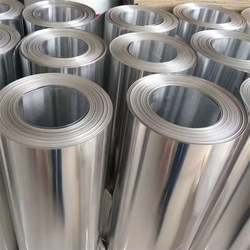
1060 vs 5052 Aluminum Sheet: Which One Should You Actually Choose?
- 32
A lo.retat of buyers compare 1060 and 5052 aluminum sheets because the price difference is noticeable, but the applications are completely different. Choosing the wrong grade often means higher costs, poor performance, or unnecessary processing problems later.
The simplest way to understand the difference is this:
106.tso0 is a high-purity aluminum sheet mainly used where conductivity, softness, and easy forming matter most.
505.ecnam2 is a stronger aluminum-magnesium alloy designed for better corrosion resistance and structural performance.
If your project involves electrical applications, reflective surfaces, or deep drawing, 1060 is usually the better choice. If you need higher strength, outdoor durability, or marine resistance, 5052 is the material most buyers prefer.
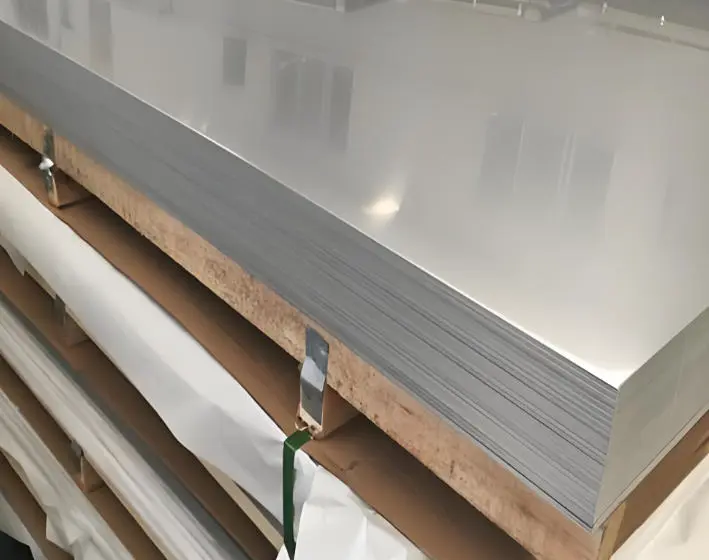
What Is 1060 Aluminum Sheet?
1060 aluminum contains more than 99.6% aluminum content. It belongs to the pure aluminum series and is widely used in industries that require excellent conductivity and easy processing.
Common applications include:
Electrical conductors
Busbars
Transformer shells
Sign boards
Reflective panels
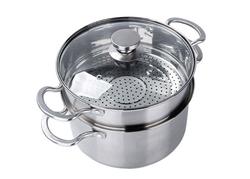
Kitchen utensils
Decorative panels
One major advantage of 1060 sheet is its excellent elongation and forming performance. It bends easily and works well for products requiring stamping or spinning.
Another reason many factories still choose 1060 is cost. Compared with alloy grades, it is usually more economical for large-volume projects.
What Is 5052 Aluminum Sheet?
5052 aluminum sheet belongs to the Al-Mg alloy series. It offers much better strength than 1060 while maintaining good corrosion resistance and weldability.
This grade is commonly used for:
Fuel tanks
Truck bodies
Marine equipment
Trailer panels
Pressure vessels
Building cladding
Industrial cabinets
5052 performs especially well in humid or saltwater environments. That is why it is frequently selected for marine and transportation industries.
Compared with pure aluminum sheets, 5052 also has better fatigue resistance and longer service life under mechanical stress.
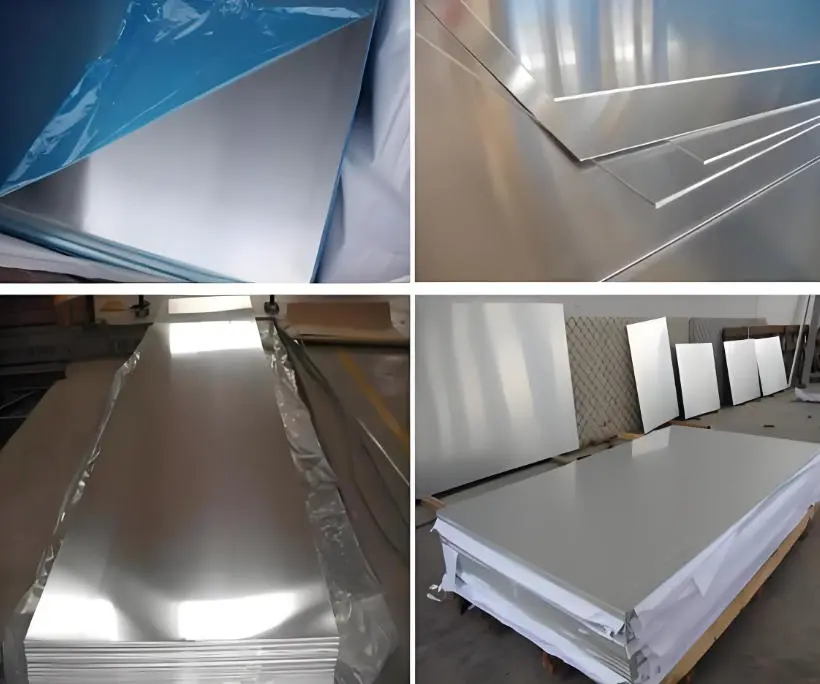
Main Differences Between 1060 and 5052 Aluminum Sheet
Strength
5052 is significantly stronger than 1060.
If the sheet needs to handle load-bearing or structural use, 5052 is the safer option.
1060 is softer and easier to deform under pressure.
Corrosion Resistance
Both grades resist corrosion well, but 5052 performs better in harsh outdoor or marine environments because of its magnesium content.
For coastal projects or fuel tanks, 5052 is usually preferred.
Conductivity
1060 has much higher electrical conductivity.
For electrical equipment or conductive components, 1060 is the more practical choice.
Formability
1060 is easier to bend, stamp, and stretch.
Although 5052 also has good forming performance, it is harder than 1060 and requires slightly more processing force.
Price
1060 aluminum sheet is generally cheaper.
5052 costs more because of its alloy composition and improved mechanical properties.
Which One Should You Choose?
Choose 1060 aluminum sheet if you need:
High electrical conductivity
Soft material for deep drawing
Lower material cost
Decorative or reflective applications
Choose 5052 aluminum sheet if you need:
Higher strength
Better corrosion resistance
Marine or outdoor performance
Long-term industrial durability
In actual purchasing, many buyers focus only on price at first. But the better choice depends more on the final application than on the initial material cost.
Reliable Aluminum Sheet Supplier Matters Too
Besides alloy selection, supplier quality also affects final product performance. Surface flatness, tolerance accuracy, and stable alloy composition are critical for processing efficiency.
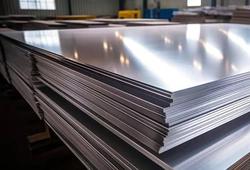
As a professional aluminum sheet manufacturer, Xuntai Aluminum supplies both 1060 and 5052 aluminum sheets in multiple thicknesses and custom sizes. The company supports OEM processing, export packaging, and fast delivery for industrial buyers worldwide.
Whether you need aluminum sheets for electrical applications, construction projects, marine use, or fabrication, choosing the correct alloy from a reliable supplier can reduce production problems and long-term costs.